How many people could vote in the UK after the 1832 Reform Act?

As part of our series of ‘explainer’ articles, aimed at clarifying the workings of the United Kingdom’s historic political system, Dr Martin Spychal examines how many people could vote in the UK after the 1832 Reform Act. This article draws from a new dataset of voting information for each constituency between 1832 and 1867, which Martin has been developing for the History of Parliament’s Commons … Continue reading How many people could vote in the UK after the 1832 Reform Act?


Crossing the Floor: Tales from the Oral History Project

Following some recent, high-profile, political defections, Alfie Steer and Dr Emma Peplow have delved into the History of Parliament’s Oral History archive to explore historical cases of MPs changing their party affiliations: their causes, motivations and wider significance. Political defections, commonly known in Westminster parlance as ‘Crossing the Floor’, have been a phenomenon in Parliament since at least the 17th century. This has either happened … Continue reading Crossing the Floor: Tales from the Oral History Project

Steps towards identifying new Black voters in 18th-century Westminster and Hertfordshire

A few months ago, the History welcomed a guest post by Dr Gillian Williamson with her groundbreaking research into John London, to date the earliest known Black voter in Britain, who lodged his vote in the 1749 by-election for Westminster. In this latest post, Dr Robin Eagles explains the potential discovery of further Black voters taking part in the same contest and subsequent polls in … Continue reading Steps towards identifying new Black voters in 18th-century Westminster and Hertfordshire

Happy New Year from the Victorian Commons for 2026!

Here’s wishing all our readers a very enjoyable New Year! 2025 was a particularly memorable year for our 1832-68 House of Commons project and the History of Parliament. After 20 years based at Bloomsbury Square in the so-called ‘knowledge quarter’ around the British Museum, we sorted and packed decades of research materials and relocated to a new open-plan office at 14-18 Old Street in Islington. The volume … Continue reading Happy New Year from the Victorian Commons for 2026!

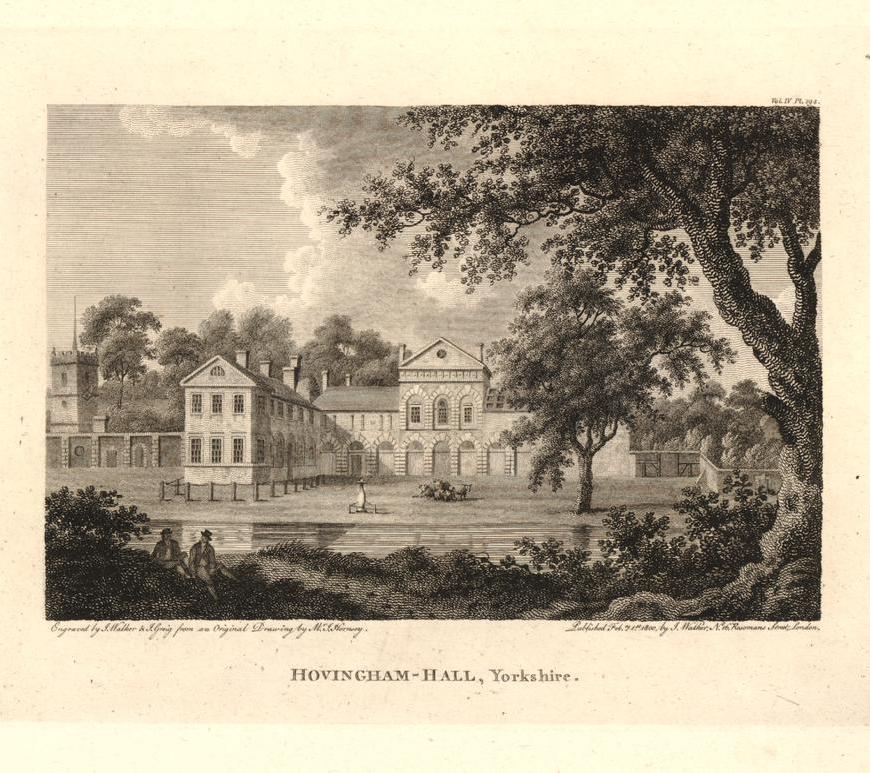
Descended from a giant: the Worsleys of Hovingham

The recent death of HRH the Duchess of Kent, who was married to the late queen’s cousin at York Minister in 1961, reminds us of her family’s long association with Yorkshire. This has included two brothers who served as archbishop of York and several members of her family who were elected to Parliament. Dr Robin Eagles considers the Worsley family’s connection with the north of … Continue reading Descended from a giant: the Worsleys of Hovingham

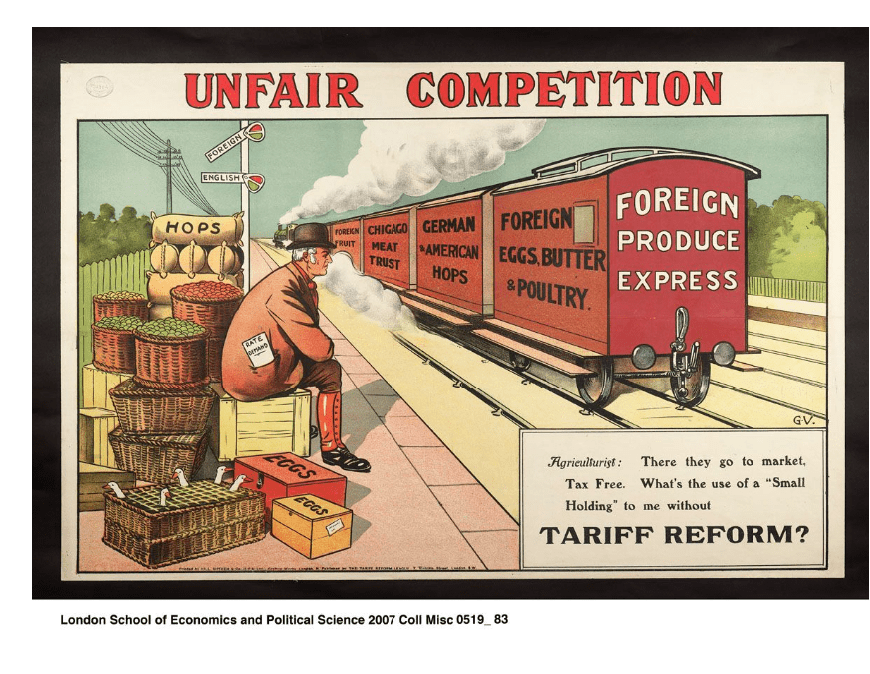
A colourful election poster produced by the Tariff Reform League. A farmer sits on a railway platform with crates and baskets of produce, watching a train called the Foreign Produce Express loaded with foreign produce, steaming past. He laments the need for tariff reform.

A ‘revolution’ in electioneering? The impact of the 1883 Corrupt Practices Act

Concluding her series on the 1883 Corrupt Practices Act, Dr Kathryn Rix of our House of Commons, 1832-1945 project looks at the long-term consequences of this major reform. In the wake of the corruption and expense of the 1880 general election, Sir Henry James, attorney general in Gladstone’s Liberal government, oversaw a landmark piece of legislation which aimed to clean up Britain’s elections: the 1883 … Continue reading A ‘revolution’ in electioneering? The impact of the 1883 Corrupt Practices Act

The 1872 Secret Ballot and Multiple Member Seats

In this post about the introduction of the ballot in UK elections, based on a seminar talk (click here to view), Dr Philip Salmon examines some of the problems secret voting initially caused and their unintended consequences. The Ballot Act of 1872 sits alongside the three major Reform Acts of the 19th century (and various Corrupt Practices Acts) in helping to transform British elections into … Continue reading The 1872 Secret Ballot and Multiple Member Seats

‘Damn the secret ballot’: the UK’s public voting system before 1872

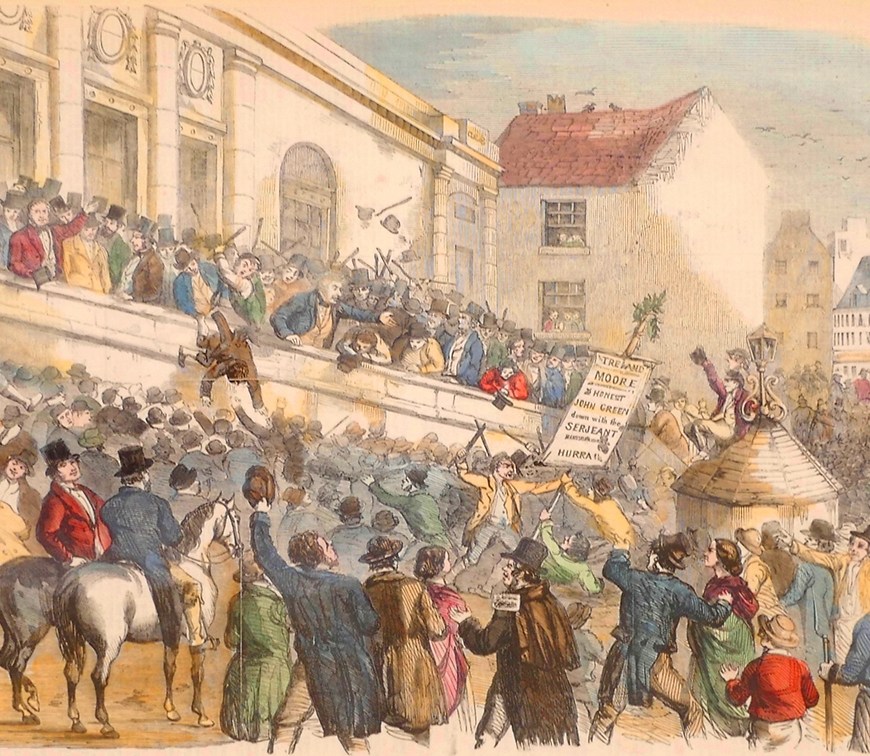
Today (18 July) marks another anniversary of the 1872 Secret Ballot Act, a topic we examined in more detail in a seminar back in 2022 (click here to view). But secret voting is now so engrained in our political culture that it’s easy to lose sight of the way the public voting system that served Britain for so many centuries worked. We’ve touched on public … Continue reading ‘Damn the secret ballot’: the UK’s public voting system before 1872

A ‘new Canterbury Tale’: George Smythe, Frederick Romilly and England’s ‘last political duel’

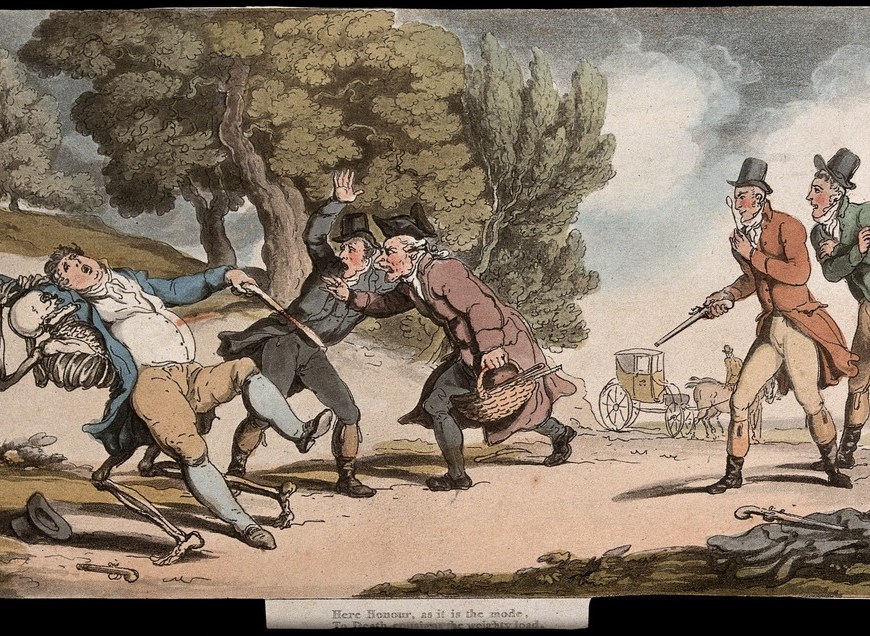
Drawing on her research into Canterbury for the House of Commons, 1832-1868 project, our research fellow Dr Naomi Lloyd-Jones looks at the 1852 pre-election duel between the city’s MPs, Frederick Romilly and George Smythe, a notorious would-be duellist, believed to be the last political duel fought in England. In the early hours of 20 May 1852, six weeks before polling in that summer’s general election, … Continue reading A ‘new Canterbury Tale’: George Smythe, Frederick Romilly and England’s ‘last political duel’

John Lewis: A Black Sailor at the 1828 Weymouth By-Election

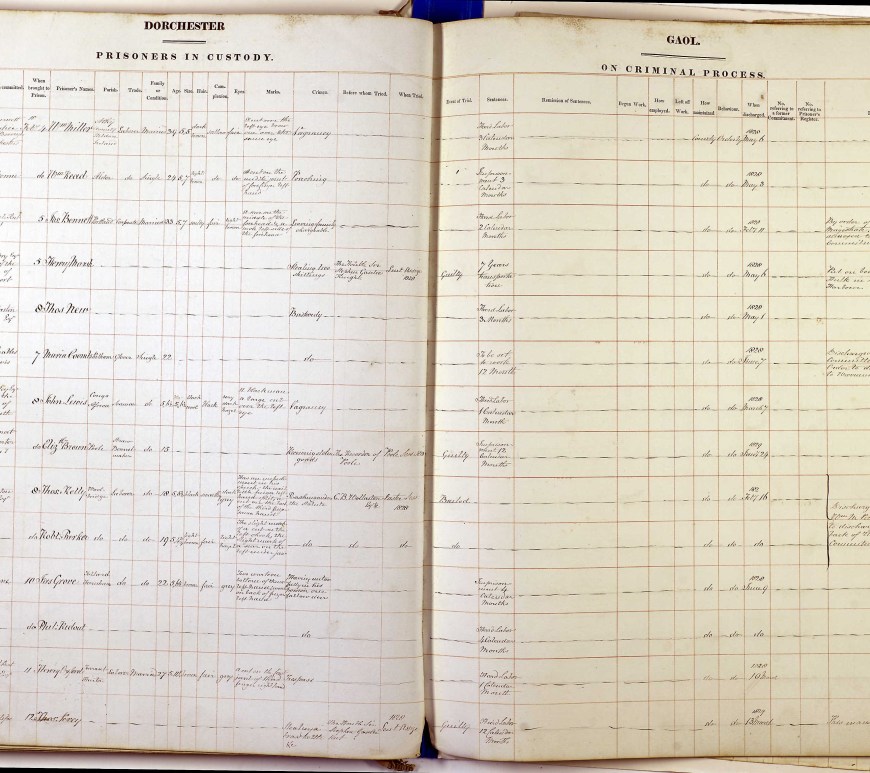
In this guest article Dr Joe Cozens discusses his research into John Lewis, a Black sailor who was arrested during the 1828 Weymouth by-election. Dr Cozens is a Nineteenth Century Social and Political Records Researcher at The National Archives, Kew. On the eve of the February 1828 Weymouth and Melcombe Regis by-election, a Black seaman named John Lewis was arrested for being ‘at the head … Continue reading John Lewis: A Black Sailor at the 1828 Weymouth By-Election