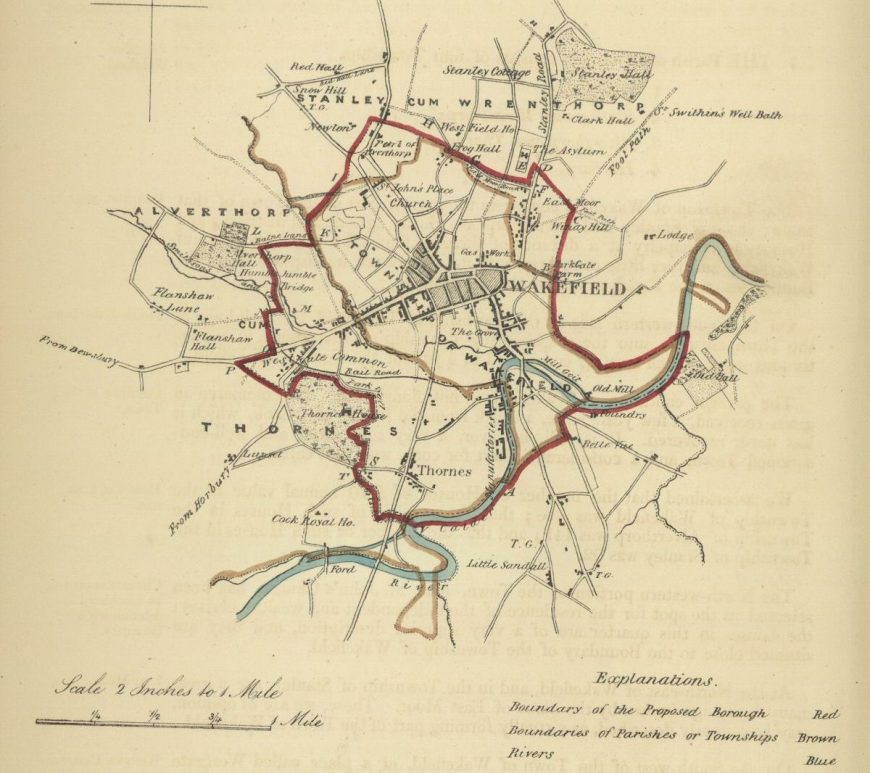
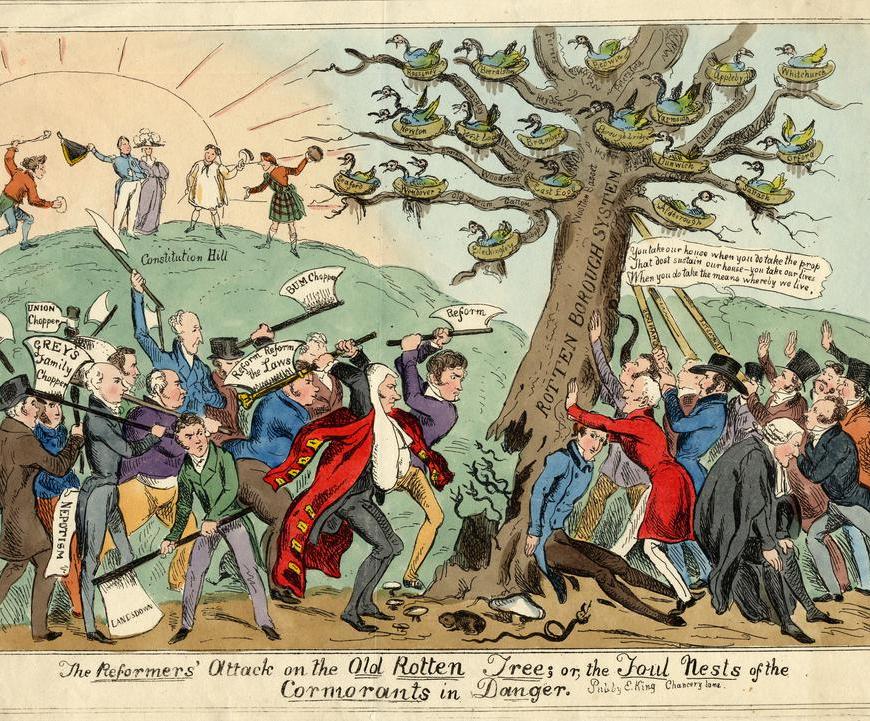
The 1832 Reform Act

‘Was the 1832 Reform Act “Great”?’ may not be the standard exam question it once was, but ongoing research about the Act’s broader legacy and impact on political culture, based on new resources and analytical techniques, continues to reshape our understanding of its place in modern British political development, as Dr Philip Salmon of our House of Commons, 1832-1945 project explains. For a 20 minute … Continue reading The 1832 Reform Act

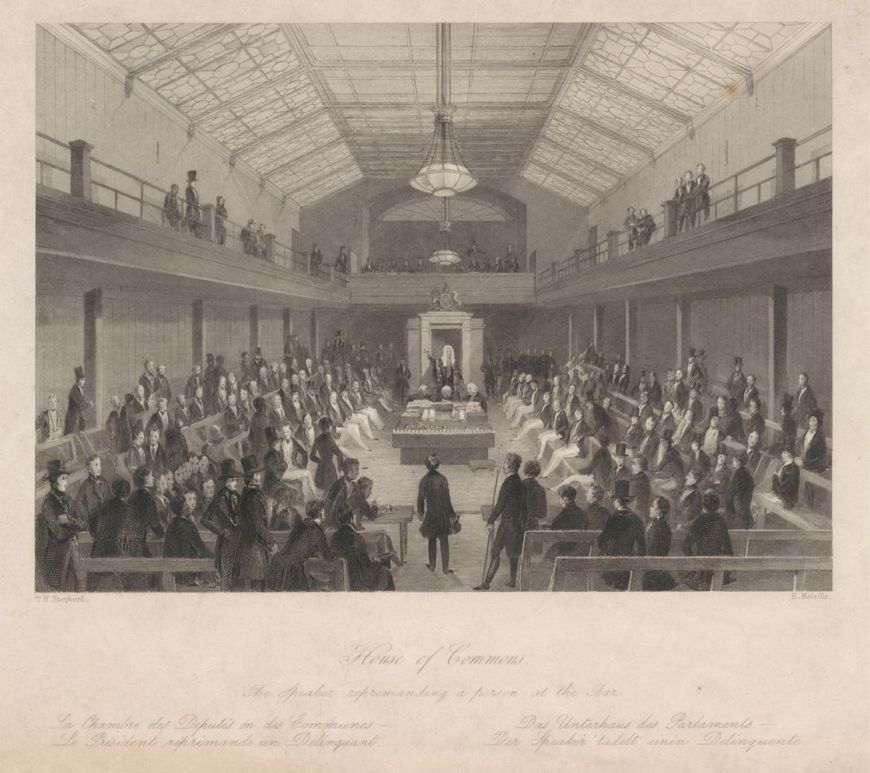
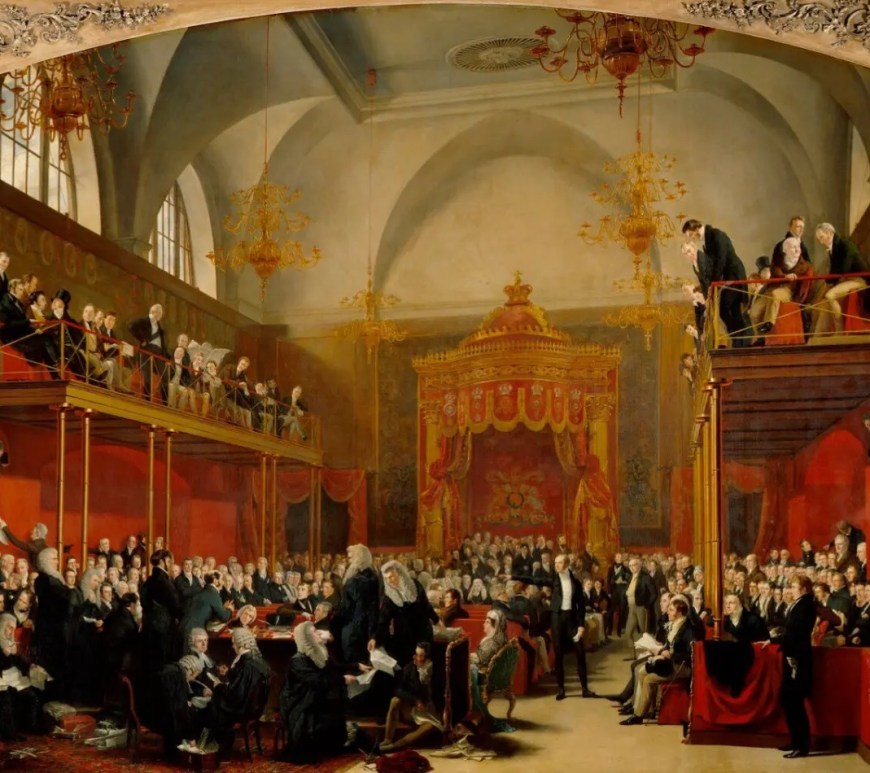
‘A place of business’: the temporary chamber of the House of Commons, 1835-1851

As part of our series on parliamentary buildings, Dr Kathryn Rix of our House of Commons, 1832-1945 project looks at the temporary chamber used by the House of Commons from 1835 until 1851, after its previous chamber was destroyed by fire in October 1834. The devastating fire at the Palace of Westminster on 16 October 1834 made the House of Commons chamber in the former … Continue reading ‘A place of business’: the temporary chamber of the House of Commons, 1835-1851

‘I have attached myself to no party’: Daniel Gaskell and parliamentary life in the 1830s

Our Victorian Commons project is shedding new light on the increasingly important role played in the behind-the-scenes business of the post-1832 House of Commons, particularly in the committee-rooms, by MPs who came from non-elite backgrounds. Dr Kathryn Rix looks at the life and career of Daniel Gaskell (1782-1875), including his friendship with the author Mary Shelley. Described by the novelist Mary Shelley as ‘a plain … Continue reading ‘I have attached myself to no party’: Daniel Gaskell and parliamentary life in the 1830s

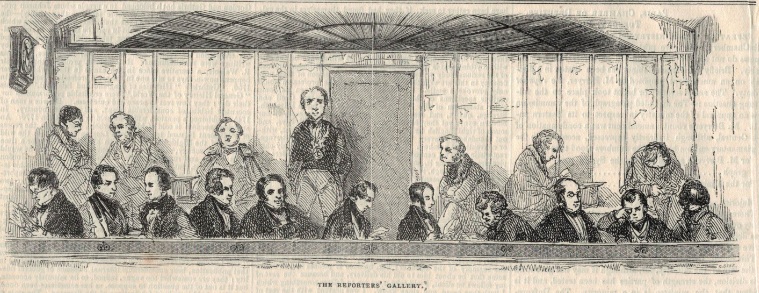
‘The status of the Press is changed indeed’: the reporters’ gallery in the nineteenth-century House of Commons

Continuing our series on parliamentary buildings, Dr Kathryn Rix looks at the accommodation provided for the newspaper journalists who reported on the proceedings of the nineteenth-century House of Commons. The history of parliamentary reporting in the 19th century has two connected strands: the history of Hansard, and the history of reporting by the newspaper press, whose accounts of Commons debates formed the basis for Hansard’s … Continue reading ‘The status of the Press is changed indeed’: the reporters’ gallery in the nineteenth-century House of Commons

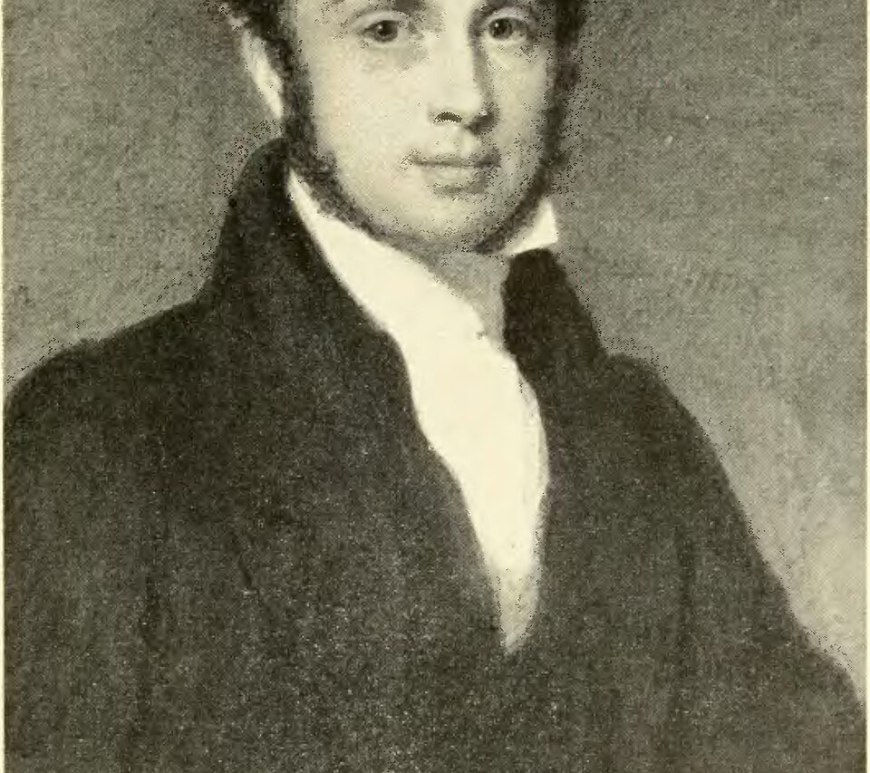
From patent laws and prison reform to a threatened duel: the intriguing life of Benjamin Rotch MP

Untangling the eclectic career of Benjamin Rotch (1793-1854), Whig MP for Knaresborough, 1832-5, proved to be an extremely interesting piece of research for Dr Kathryn Rix of our House of Commons, 1832-1945 project, taking in the Nantucket whaling industry, the complexities of patent law, prison reform and a challenge to a duel. A quirky character, described by one contemporary as a man who ‘would resort … Continue reading From patent laws and prison reform to a threatened duel: the intriguing life of Benjamin Rotch MP

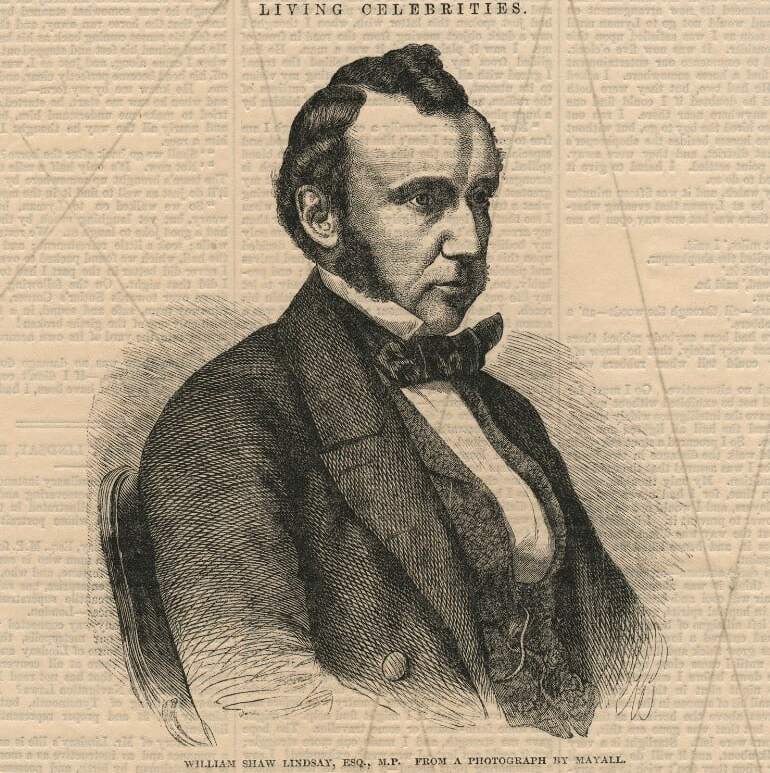
The remarkable rise of William Schaw Lindsay MP (1815-1877)

William Schaw Lindsay MP rose from poverty-stricken orphan to shipping tycoon by his late 30s. Lindsay was known for his involvement in the Administrative Reform Association (1855) after the perceived aristocratic mismanagement of the Crimean War. He was also an outspoken advocate for the Confederate state during the American Civil War. This article from our House of Commons, 1832-1945 project explores his life and career. … Continue reading The remarkable rise of William Schaw Lindsay MP (1815-1877)

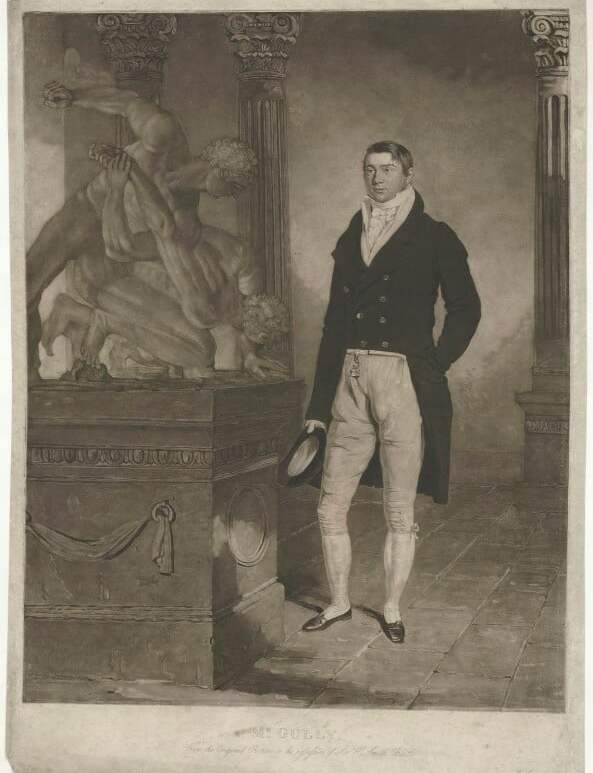
Prisoner, prize-fighter, politician: John Gully’s rise to fame 

Amongst his many endeavours, John Gully’s venture into politics was an unexpected, yet successful, career choice. In this article Dr Kathryn Rix of our House of Commons, 1832-1945 project explores Gully’s life, from his humble beginnings to his sporting fame and his election as MP for Pontefract following the upheaval of the 1832 Reform Act. In March 1833 the cartoonist ‘H.B.’ (John Doyle) chose three … Continue reading Prisoner, prize-fighter, politician: John Gully’s rise to fame 

House of Lords reform: a Victorian perspective

Unlike the House of Commons, which underwent major ‘democratic’ reform in the 19th century, the Lords remained virtually unchanged during the entire Victorian period. With a new hereditary peers bill now entering its final stages, Dr Philip Salmon explores how and why the House of Lords was able to survive the ‘age of reform’, highlighting constitutional difficulties that still have relevance today. The 19th century … Continue reading House of Lords reform: a Victorian perspective

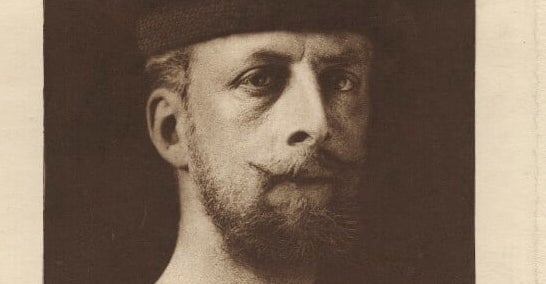
Lord Ronald Gower (1845-1916): the life of a queer MP at the time of the Second Reform Act

Dr Martin Spychal introduces his series of articles on Lord Ronald Gower (1845-1916), who was elected as MP for Sutherland in 1867. This is the first of five articles originally published on the Victorian Commons website between February 2020 and May 2021. Born into ‘the inner circle of English aristocratic life’, Lord Ronald Gower (1845-1916) is best known as the likely inspiration for the hedonistic … Continue reading Lord Ronald Gower (1845-1916): the life of a queer MP at the time of the Second Reform Act

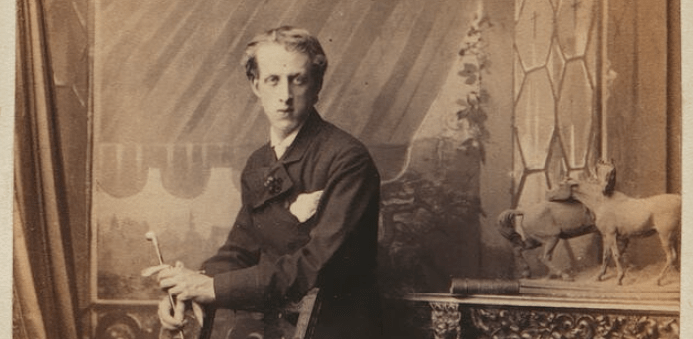
Lord Ronald Gower (1845-1916): the social life of a queer MP at the time of the Second Reform Act

In the second article in his series on Lord Ronald Gower (1845-1916), Dr Martin Spychal explores Gower’s London social life during his first year in Parliament, including a brief summer romance with the son of the commissioner of the Metropolitan Police. One of the most privileged men in nineteenth-century Britain, Lord Ronald Gower (1845-1916), was returned to Parliament in May 1867, aged 21, for his … Continue reading Lord Ronald Gower (1845-1916): the social life of a queer MP at the time of the Second Reform Act