Richard Bancroft is well known to students of late Elizabethan and Jacobean England. A relentless enemy to nonconformist puritans, Bancroft served first as bishop of London (1597-1604) and then as archbishop of Canterbury (1604-1610). However, towards the end of Elizabeth’s reign this familiar prelate’s ecclesiastical career was briefly interrupted by a little known diplomatic episode, as Dr Andrew Thrush, the editor of our Elizabethan House of Lords section, explains…
In July 1599 the mayor and aldermen of Hull complained to the Privy Council that five ships from their town had been seized by Christian IV, king of Denmark-Norway, while fishing near ‘Wardhouse’ (Vardøhus), a fortress off Vardo, on the north Norwegian coast. Their crews had been placed in irons, and some of the seamen were allegedly tortured. Four of the ships were detained as prizes, while the fifth was sent back to England with a message that no-one was to fish in Danish-Norwegian waters without licence. Hull’s governors were incensed. Even though Hull’s ships had long fished off the Norwegian coast, many of the town’s merchants now faced financial ruin. Moreover Christian’s aggressive actions, if left unchecked, threatened the English trade route to Muscovy. The harsh treatment meted out to the Hull fishermen was undoubtedly due to the fact that Christian IV was then trying to assert his authority over northern Norway. He was engaged in a territorial dispute with Muscovy, which claimed that Vardo and the surrounding Lapp country belonged to the Tsar.
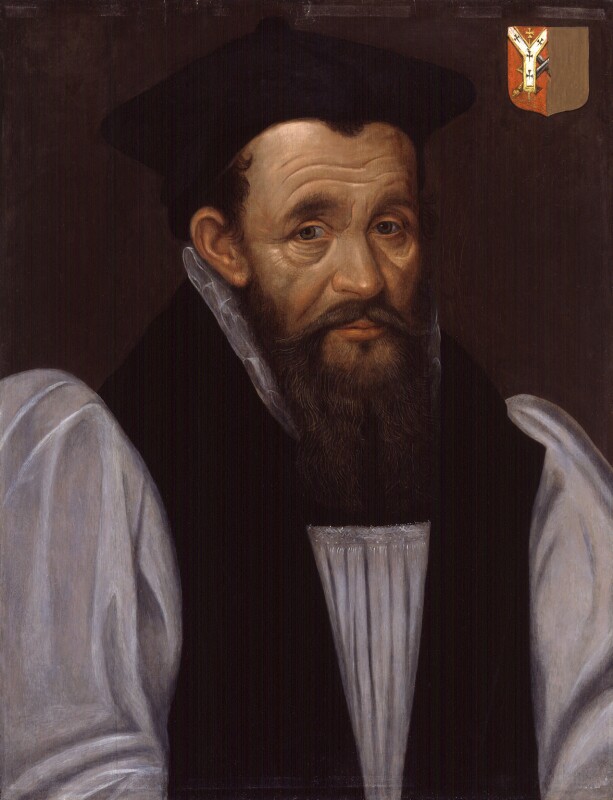
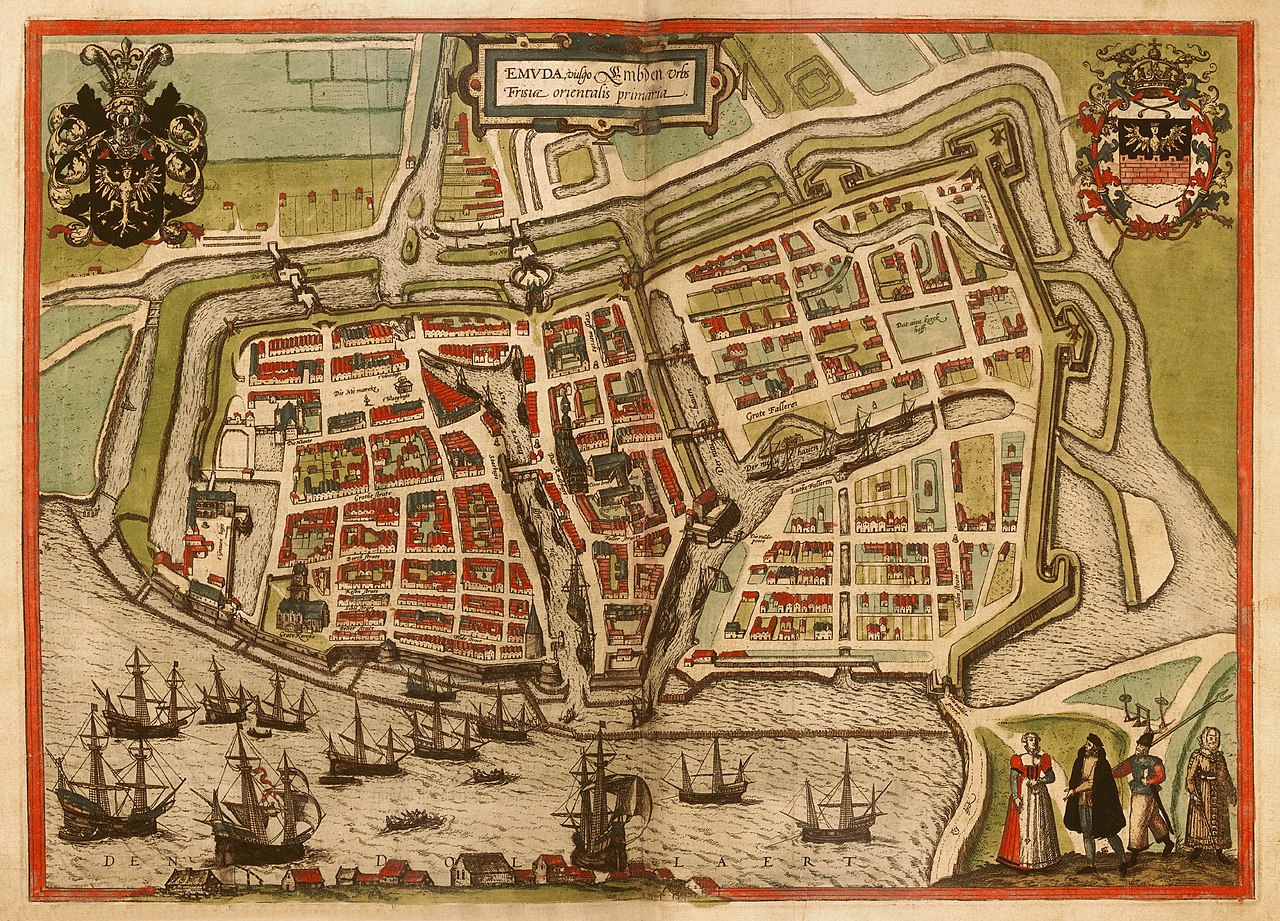
Naturally both the queen, Elizabeth I, and the Privy Council sympathized with Hull’s complaint and agreed to intervene. However, as neither England nor Denmark employed a resident ambassador in the other’s capital, it took several months and the dispatch of a special ambassador to Copenhagen to arrange a meeting to discuss the dispute. Eventually, over the winter of 1599/1600, it was agreed that commissioners from both countries would meet on neutral ground the following Easter. The place chosen was Emden, a quasi-autonomous city in north-western Germany which enjoyed the protection of the neighbouring Dutch Republic. In March 1600, with the conference now imminent, Elizabeth selected three delegates to attend this conference. Unsurprisingly, two were civil lawyers experienced in maritime law, Dr Christopher Parkins and Richard Swale. However, the third figure chosen, and the nominal head of the mission, was a leading churchman, Richard Bancroft, the 45-year old bishop of London.
Perhaps no one was more astonished by Bancroft’s selection for this mission than Bancroft himself. Quite apart from the fact that he had never been abroad and lacked both diplomatic experience and expertise in the civil law, he was the first bishop chosen to serve on a diplomatic mission since Thomas Thirlby, bishop of Ely, had been included on the delegation which negotiated the 1559 treaty of Câteau-Cambrésis. Since her accession in 1558, Elizabeth had broken with the practice of the past and largely restricted prelates to their ecclesiastical duties. The only exceptions to this rule were her appointment of Thomas Young, archbishop of York as lord president of the council in the North in 1564 and the addition of John Whitgift, archbishop of Canterbury, to the Privy Council in 1586.
Elizabeth’s reasons for choosing Bancroft remain unknown. She may have thought that, as a Protestant bishop with well-known anti-Calvinist leanings, he would be acceptable to the Lutheran Danes. However, why choose a bishop at all? Would not a nobleman have been preferable? The answer to this question is probably ‘yes’. But by the late 1590s the queen was having difficulty in finding noblemen capable of performing diplomatic missions, as many peers were either not up to the task or simply lacked the means to subsidise the cost of an official embassy. Bancroft, by contrast, was shrewd and capable, the bane of radical puritans. Moreover, he had neither wife nor children to support and an annual income of more than £1,100 at his disposal. Elizabeth’s only concern was not the depth of Bancroft’s pockets but his notorious thriftiness. For that reason, she reminded him that, as leader of the Emden mission, he would be expected to ‘keep a bountiful house’.
Bancroft was not in the least bit pleased to have been selected for this mission and initially pleaded inexperience and a ‘tertian ague’ (malaria) to avoid having to go. However, once it became clear the queen would not budge, he threw himself into the task with his customary vigour. Determined to make a good impression, he decided to take with him a 40-strong entourage and a large amount of plate, which he borrowed, with the queen’s permission, from the Jewel House. He also got himself admitted to membership of Doctors’ Commons, the professional body to which all leading civil lawyers belonged, presumably in order to improve his credentials in the eyes of the Danes.
Bancroft and his two fellow commissioners sailed from Gravesend on 18 April 1600. However, a persistent easterly wind meant that as late as the 29th they were still at Queenborough, in north Kent. By the time they reached Emden on 10 May the Danish commissioners were on the point of departure, their commission being about to expire, having awaited the English delegation for more than a month. Thoroughly angry, the Danes refused to confer with the newly arrived delegates unless the English rowed out to their ship, an offer which Bancroft and his colleagues rejected as humiliating. Eventually the English were forced to relent, whereupon one of their number, perhaps Bancroft himself, took to the water. On seeing this the Danes immediately spread sail and departed.
In the immediate aftermath of this fiasco, the English delegates were obliged to return home empty-handed. As a result, the governors of Hull had no choice but to renew their suit for redress later that same year. The queen did not blame Bancroft for the ignominious failure of his mission, though, but rather thanked him for undertaking the journey.
In the aftermath of this, his first and only diplomatic mission, Bancroft managed to retrieve something from the wreckage. During his short time at Emden, he had succeeded in cultivating some useful contacts in the town, where he was evidently wined and dined. Consequently, over the next few years, he was able to keep the queen’s chief minister, Sir Robert Cecil, informed of events in north-west Germany, a not unimportant service in an era when reliable news was often in short supply. Bancroft may have derived a further benefit from his trip to Emden. According to the newsletter-writer John Chamberlain, a well-informed observer, he did not return to England with his two colleagues but instead travelled alone and incognito through the United Provinces. This raises the intriguing but hitherto unconsidered possibility that Bancroft, who liked to study his religious enemies up close, used the opportunity of this unplanned adventure to witness Dutch Calvinist practices at first hand. Whatever the truth of the matter, Bancroft’s trip to Emden is notable as being the last occasion on which a bishop headed a diplomatic mission until 1712-13, when John Robinson, bishop of Bristol, represented Great Britain at the Congress of Utrecht.
ADT
Further reading:
P. Collinson, Richard Bancroft and Elizabethan Puritanism (Cambridge, 2013)
S.B. Babbage, Puritanism and Richard Bancroft (London, 1962)
Although neither of these studies discusses it, Bancroft’s trip to Emden will feature in the biography now in preparation for our volumes on the Elizabethan House of Lords. For the bishop’s later career, see also his entry in The House of Lords 1604-29 ed. Andrew Thrush (Cambridge, 2021).