In the first of his articles on Harriet Grote (1792-1878), our research fellow Dr Martin Spychal, explores Harriet’s early life, her emergence as a central figure among London’s intellectual radicals during the 1820s and her arrival on the Westminster political scene during the reform crisis of 1830-32…
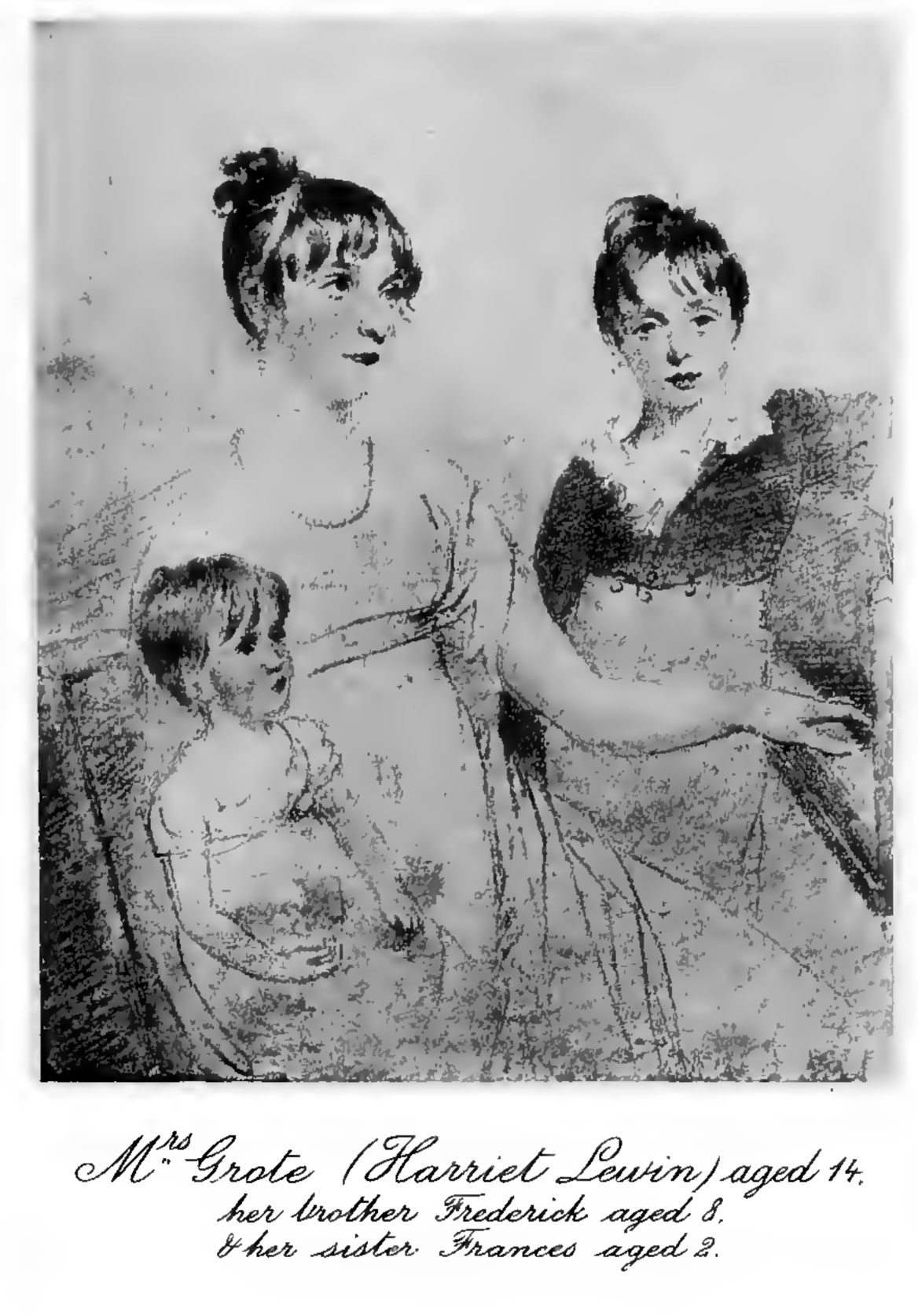
Harriet Grote, née Lewin, grew up in the comfortable surrounds of Ridgeway Castle near Southampton, which her father, Thomas Lewin (1753-1843), built with his earnings as a merchant for the East India Company. A tall and commanding presence in the Lewin household, Harriet was known from an early age as ‘The Empress’ or ‘Empress of the world’ by her parents, siblings and family friends.
Her height set her apart from her peers. Harriet recalled how at eleven ‘I grew tall of my age, and naturally stooped a little, as most growing girls do’. Her parents tried to ‘counteract’ her slouching by requiring her to wear an elaborate back brace. ‘This accursed instrument’, Harriet recalled, was ‘one of the bitterest grievances of my youth’. She later blamed the brace for her ‘bad headaches’ (migraines) that she suffered throughout adulthood.
Harriet was educated by a string of governesses, one of the longest serving being the ‘brutal’ and ‘tyrannical’ Miss Beetham, who Harriet nicknamed ‘The Beetham’. From an early age her teachers struggled to match her intellect, forcing Harriet to seek her early mentorship in politics, literature and music from her father, aunts and family friends.
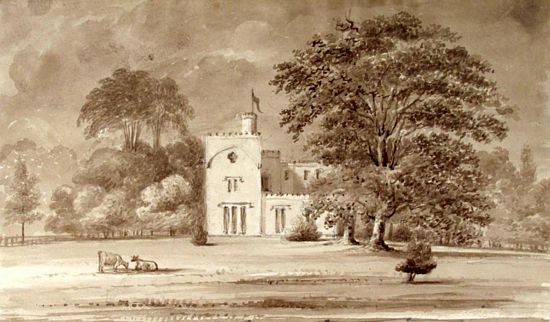
Harriet’s childhood home ‘Ridgeway Castle’ c.1800 © Bitterne Local History Society
Her governesses also struggled to keep up with what Harriet referred to as her ‘energetic disposition’ and love for ‘any bodily exercise requiring skill and even personal danger’. Miss Beetham was particularly alarmed by this ‘active, ardent … [and] unfeminine’ character trait, taking it upon herself to ‘cure’ Harriet of such ‘propensities “unbecoming a young lady”’. Thankfully, Miss Beetham failed and Harriet’s unwillingness to conform to gender stereotypes in dress, speech, character, hobbies and intellectual pursuits remained one of her most commonly remarked upon characteristics throughout her life.
By 1815 Harriet and her family had moved to Bexley in Kent, which was where she met the banker, self-trained scholar and future MP, George Grote (1794-1871). During a five-year courtship George took it upon himself to educate Harriet in the ‘classic texts of political economy and philosophy’. Harriet was easily George’s intellectual match and together they cultivated a shared radical, utilitarian and atheist outlook. They eloped against both of their parents’ wishes in 1820.
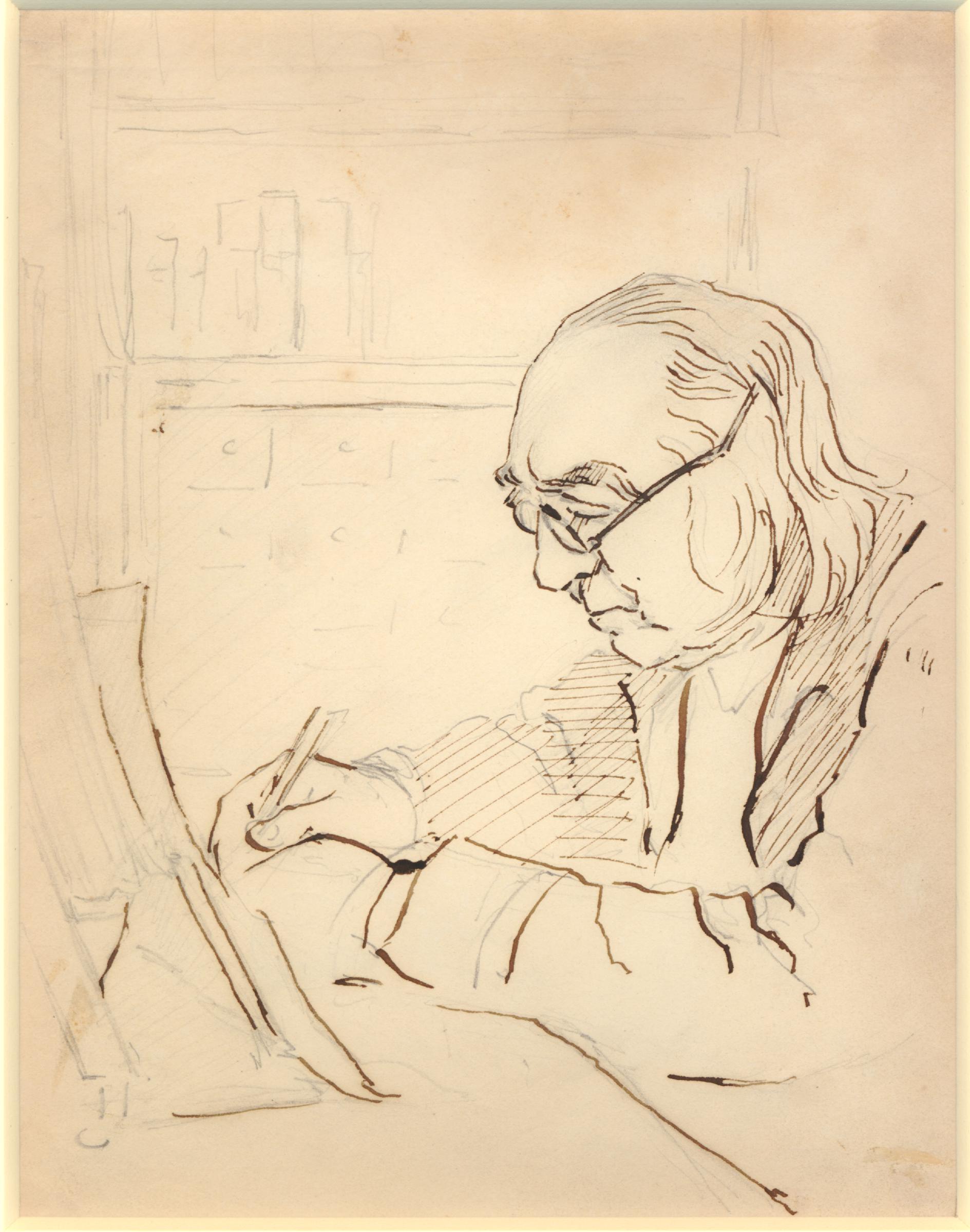
After their marriage Harriet and George lived between their central London residence, 62 Threadneedle Street, and a string of suburban North London homes, eventually settling in Green Lanes, Stoke Newington. It was at Threadneedle Street, or ‘Threddle’ as she referred to it, where Harriet established herself as a key figure among London’s radical intellectuals of the 1820s.
The Grotes became close friends with the leading utilitarian thinkers Jeremy Bentham (1748-1832) and James Mill (1773-1836), who they hosted at their twice-weekly reading group and evening salons at Threadneedle Street. The reading group, which at various points included figures such as John Stuart Mill, David Ricardo, John Ramsay McCulloch, John and Sarah Austin, and John Arthur Roebuck, ‘met every Wednesday and Saturday … at the dreary hour of 8:30 am, and broke their fast upon the latest emanation of the [James] Mill brain’.
In contrast to her reclusive husband, Harriet was outgoing, charming and sociable. One contemporary remarked ‘I like him [George], he is so ladylike, and I like her, she’s such a perfect gentleman’. As an active hostess and contributor to discussions, it was Harriet rather than George who turned ‘Threddle’ into an intellectual hub for London’s utilitarians and political economists. Importantly, her role as the Threadneedle Street hostess set her on the path to becoming a prolific ‘woman of letters’, placing her at the centre of an expansive national, and international, network of political and intellectual correspondents over the following decades.
Having previously remained aloof from Westminster politics, the Grotes were thrown into a decade of parliamentary and political activism during the reform crisis of 1830-32. With the blessing of James Mill, George ran the reform campaign for the City of London at the 1831 general election and Harriet recalled how at times, particularly during the ‘Days of May’, politics became ‘so intensely exciting’ that ‘we scarce did anything but listen for news, and run about from one house to another’.
In the 1832 Reform Act, and for a brief period of time during the Grey ministry, Harriet and George saw a path to real, radical political change. As I’ll explore in subsequent articles, Harriet spent the next decade pushing the boundaries of political convention in an attempt to effect this change…
MS
To read part two of Martin’s article series click here
Links to Martin’s series on Harriet Grote are below:
Part 3: ‘Harriet Grote (1792-1878) and the first reformed Parliament, 1833-34: a woman at Westminster’
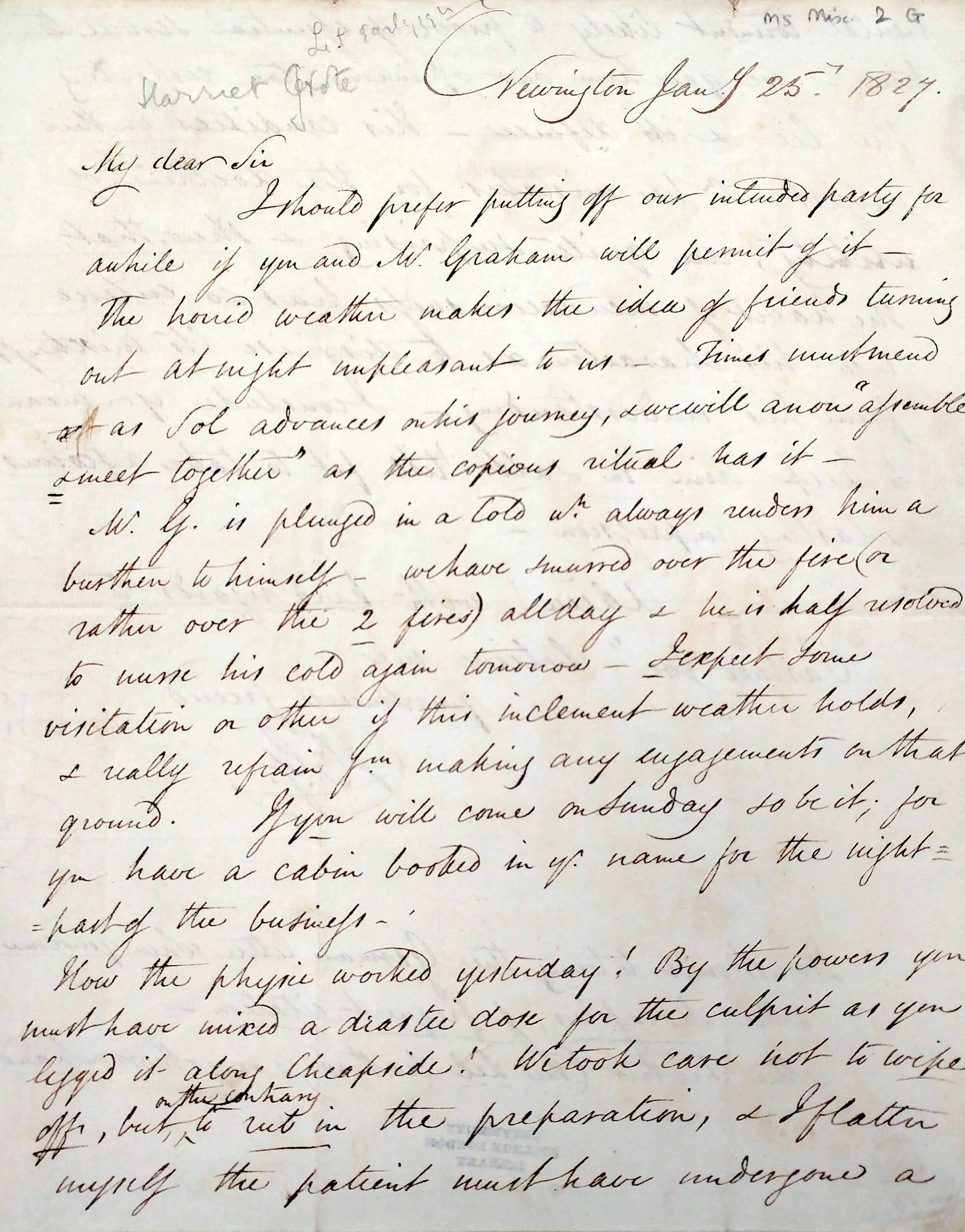
Harriet Grote’s letter to John Arthur Roebuck was on display as part of the Reform, React, Rebel exhibition at UCL, which was curated by Martin and Dr Vivienne Larminie. The exhibition catalogue and a video introducing the exhibition can be viewed online.
Further Reading
S. Richardson, ‘A Regular Politician in Breeches: The Life and Work of Harriet Lewin Grote’, in K. Demetrious (ed.), Brill’s Companion to George Grote and the Classical Tradition (2014)
J. Hamburger, ‘Grote [née Lewin], Harriet’, Oxf. DNB, www.oxforddnb.com
Lady Eastlake, Mrs Grote: A Sketch (1880)
H. Grote, Collected Papers: In Prose and Verse 1842-1862 (1862)
H. Grote (ed.), Posthumous Papers: Comprising Selections from Familiar Correspondence (1874)
M. L. Clarke, George Grote: A Biography (1962)
This is an updated version of an article originally published on the Victorian Commons website on 4 January 2021, written by Dr Martin Spychal.