Whilst many see the ignition of the Wars of the Roses as taking place later in the 15th century, Dr Simon Payling, of our 1461-1504 section, explores the impact of the marriage of Richard of Conisbrough and Anne Mortimer in 1408 and the consequences of their union…
In the study of medieval landholding, it is a common theme that an aristocratic marriage might have the most unpredictable of material consequences. A bride, with scant prospects of inheritance at her marriage, might, in her descendants, bring an unlooked-for windfall to the groom’s family. It was, famously, such a match, made in the late 1410s, that brought the great Mowbray dukedom of Norfolk to their social inferiors, the Howards, some sixty years later. Of more general interest, however, are those matches that had profound political consequences, largely unanticipated or entirely disregarded when they were made.
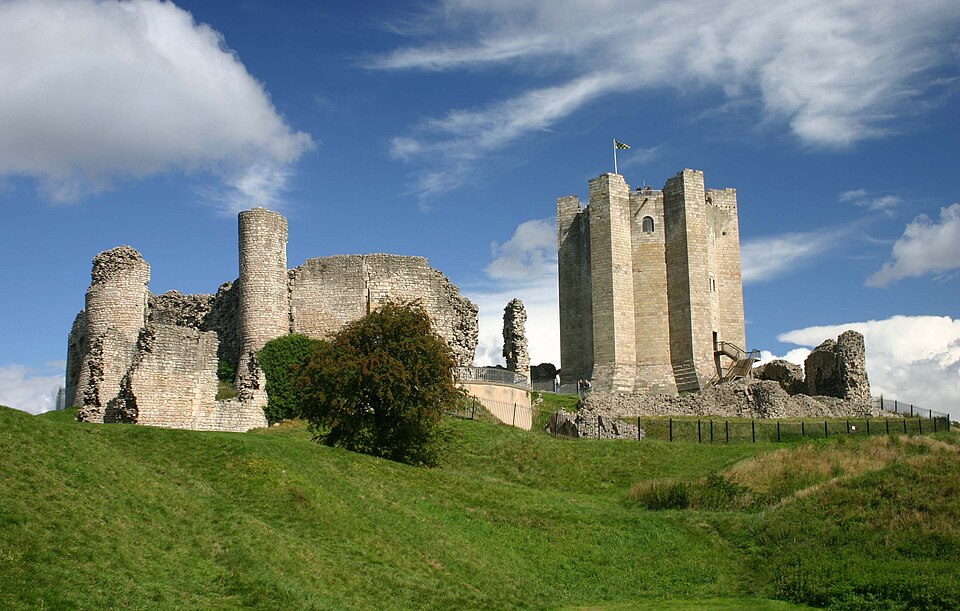
Of these one of the most consequential is that of Edward III’s grandson, Richard of Conisbrough, younger brother of Edward, duke of York, to that King’s great-granddaughter, Anne, sister of Edmund Mortimer, earl of March. Even when it was completed in 1408, some at least must have been aware of its potential implications. If the cards of birth and death were to fall in a certain way, it would bring about two profound political changes. First, it would unite the lands of York and Mortimer and so create the largest aristocratic inheritance in the realm. Second, the beneficiary of that union would be the representative of two claims to the throne, the one in the male line from Edward III’s fourth son, Richard’s father, Edmund of Langley (d.1402), duke of York, and the other, much more importantly, from his second, Lionel of Antwerp (d.1368), duke of Clarence.
Even in 1408, this convergence of lands and titles was a distinct possibility. Only one life, that of his brother, stood between the groom and the duchy of York, and, significantly, that life was unlikely to be perpetuated in issue. The duke had no issue by his wife, the twice-widowed Philippa Mohun, who was several years his senior, and it was clear that, unless she died and the duke remarried, his younger brother only needed to survive him to be his heir. The bride’s prospects were less clear, but hardly remote. Only two lives, those of her unmarried brothers, Edmund and Roger, lay between her and a half share (with her sister) of the earldom of March. With the birth of a son, Richard, to the couple on 22 September 1411, there was a potential long-term beneficiary should the male line of the Mortimers fail, and, as seemed highly probable, the duke died childless.
In these circumstances, a supporter of the house of Lancaster would not have been unduly pessimistic in predicting that the greatest aristocratic inheritance in the land would come into the hands of the representative of the Mortimer claimant. In 1399 the political nation had adjudged the seniority of that claim to that of the Lancastrian line of Edward III’s third son, John of Gaunt, negated by a female descent (through Clarence’s only child, Philippa, wife of an earlier Edmund Mortimer (d.1381), earl of March). That judgment, however, was not beyond revocation.
The marriage thus posed obvious, albeit contingent, dangers to the house of Lancaster. The Mortimer claim had served as a rallying point for rebels against Henry IV’s rule, most notably the Percy rising of 1403. Further, in February 1405, the hazard of a hostile alliance between the houses of York and Mortimer had been made evident when Richard’s sister, Constance, Lady Despenser, abducted the two Mortimer boys from Windsor castle. Her aim was to take them to their uncle, Sir Edmund Mortimer, an adherent of the Welsh rebel, Owain Glyn Dŵr. It was fortunate for Henry, that the boys were quickly recaptured.
This raises an obvious question: how did a marriage so apparently pregnant with danger to the house of Lancaster come about? It is likely that Richard met his future bride in 1404 when he was campaigning against Glyn Dŵr, and she was at the Welsh castle of Powis in the custody of her mother, Eleanor, and stepfather, Edward, Lord Cherleton, one of the leading English commanders in Wales. When they married, they did so secretly, without the papal licence necessary to dispense them from the disability of consanguinity and without the reading of banns. As a result, they were excommunicated, but, on 23 May 1408, they secured papal absolution, and their marriage was confirmed. This secrecy may reflect the couple’s awareness of the political sensitivity of their union, yet, secret or not, the need for a papal licence offered the opportunity for external intervention. If Henry IV had wished to intervene, that was the moment he might have lobbied at the papal curia against the granting of the licence.
If this lack of apparent intervention suggests that Henry IV did not view the marriage as threatening, his son and successor, had a livelier appreciation of the dangers posed by the Mortimer claim. When Henry V acceded to the throne in 1413, the earl of March, the sole male representative of the main Mortimer line after the death of his younger brother, Roger, remained unmarried. Soon, however, he found himself a bride in Anne Stafford. She had the prospect of a great inheritance, for she was heiress-presumptive to her unmarried brother, Humphrey, later duke of Buckingham. The marriage, like that of Anne Mortimer, thus raised the possibility that two great aristocratic inheritances would be united in the hands of the Mortimer claimant. Henry V reacted with characteristic ruthlessness. On grounds of doubtful legality, he imposed a massive fine of 10,000 marks on the earl. The mystery is why the young earl was free to choose his own bride. He had been in royal wardship since 1398 and over the canonical age of consent since 1405. The Lancastrian regime may have calculated that the longer he remained unmarried, the greater the probability that he would die childless. The great fine may reflect the King’s anger at the frustration of that hope.
In this context, Richard of Conisbrough’s marriage is yet more surprising. If the extinction of the Mortimer line was the calculation, it was folly not to have prevented the marriage of his sister into the ducal house of York. What Henry V feared in the earl of March’s marriage, namely an expanded landed inheritance in the hands of the Mortimer claimant, was already in prospect because of this earlier match. Indeed, it was this marriage that later turned this fear into reality, for the dynastic cards played out horribly unfavourably for the house of Lancaster. The childless deaths of the duke of York at the battle of Agincourt in 1415 and the earl of March in Ireland in 1425 brought about the union of lands and titles in the hands of son of the marriage between York and Mortimer. From the dynastic viewpoint, another childless death was equally important. Anne’s sister, Eleanor, had, at about the time of her sister’s marriage, married Sir Edward Courtenay, son and heir-apparent of the blind earl of Devon, but she died childless at some unknown date between 1414 and 1418. Had she had male issue, that issue would have been coheir to the Mortimer inheritance with her infant nephew, the duke of York. The claim to the Crown would then have become divided and, as long as both these male lines survived, beyond realization. As this did not happen, the marriage of 1408, and the series of childless deaths that followed it, brought the grandson of that marriage, Edward IV, the claim to the throne he vindicated in 1461.
Further reading
T.B. Pugh, Henry V and the Southampton Plot of 1415 (Southampton Record Series, 1988)
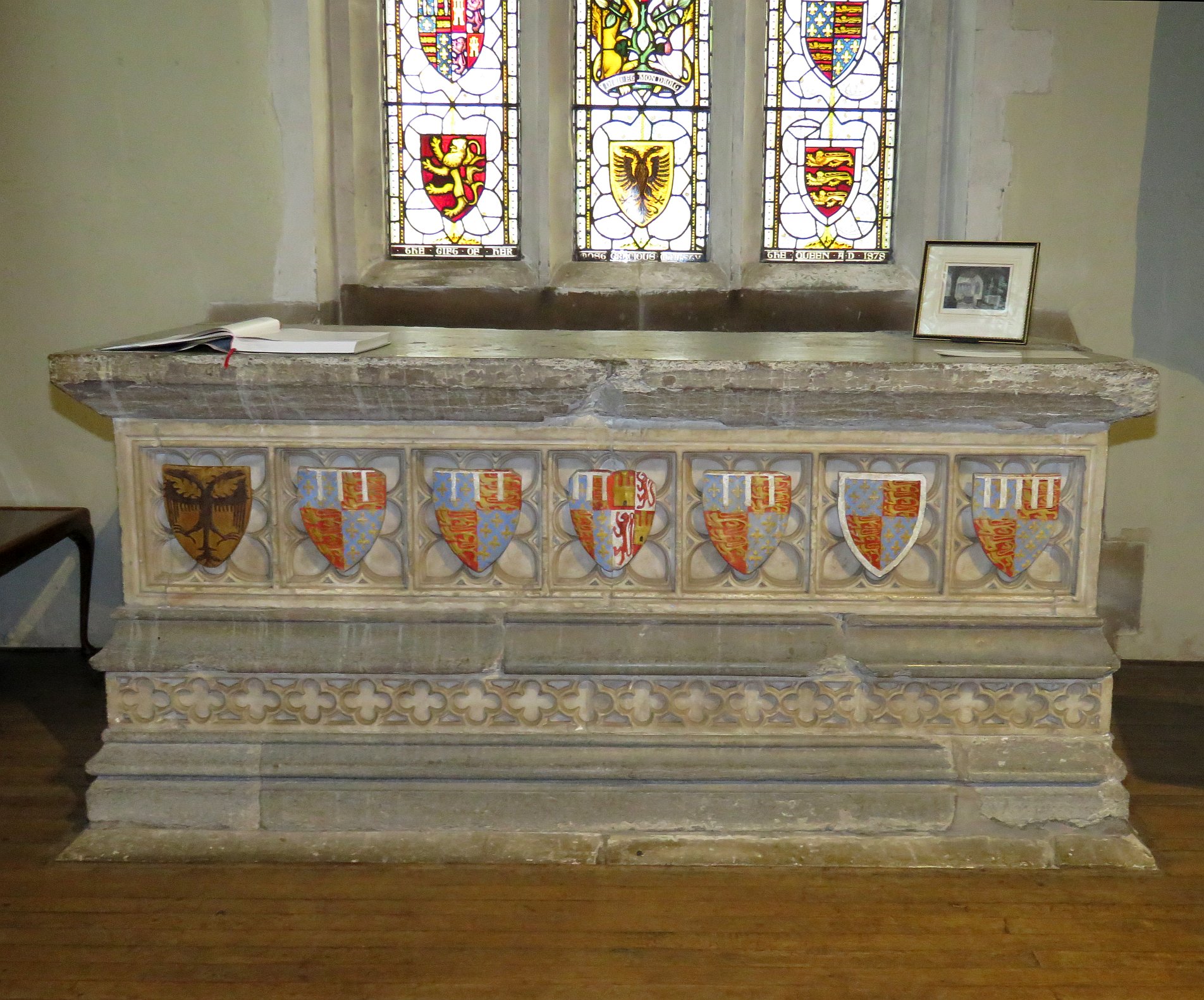
J. Evans, ‘Edmund of Langley and his Tomb’, Archaeologia, xlvi. 297-328. For more information on the tomb of Edmund duke of York and Isabella of Castile.
Fascinating long game…
Pugh’s material on Henry V and the events at Southampton (Conisburgh’s execution) are a must read, impossible to understand circumstances of either House otherwise. And look into the political carnage causedby the Coventry Parliament 1459, which Payling has also written about; if the Conisburgh-Mortimer marriage was a spark then the sheer lunacy perpetrated at Coventry was the point of no return (ie. civil war) for the country.