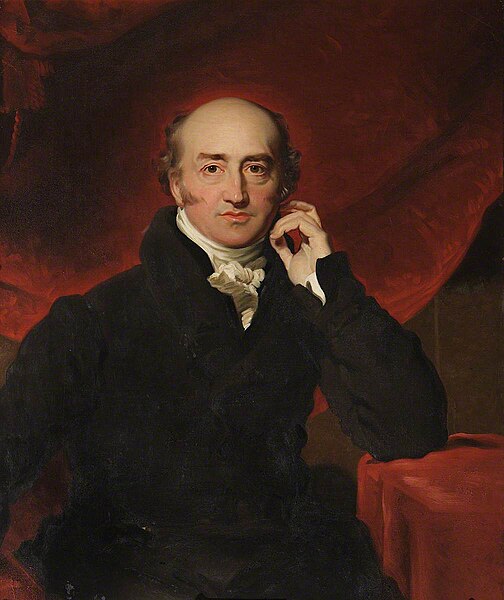
George Canning (1770-1827) was the most talented Member of the House of Commons of his generation, but his political career, which took him (briefly) to the pinnacle, was chequered and controversial. He entered the House in 1793 as a devoted Pittite, and by 1798 had there a band of ten personal followers, chiefly friends from Eton and Christ Church. Between 1801 and 1809, both in and out of office, he commanded the loyalty of a similarly sized group of Members; but, as Dr David Fisher shows, it was not until the sessions of 1810-13, following his acrimonious resignation as foreign secretary, that he deliberately manipulated his `little senate’ for his own political purposes.
One of the younger generation recruited by William Pitt, Canning was soon in the prime minister’s complete confidence and proving himself an asset to the government in debate. He was under-secretary at the foreign office, Jan. 1796-Mar. 1799, when he was appointed a commissioner of the India board, which post he held in conjunction with that of joint paymaster-general from May 1800. The group of Members personally attached to him in the 1796 Parliament included four of his earliest and closest friends: Charles Rose Ellis; Lord Granville Leveson Gower; William Sturges Bourne, and Edward Wilbraham Bootle.
Canning resigned with Pitt in March 1801, when the Speaker, Henry Addington, became prime minister. For the next three years Canning worked towards securing the return to power of Pitt, who until March 1804 declined to turn against the ministry. In the 1802 Parliament, Canning had at one point 13 personal adherents, who included the Pittite country gentlemen, William Ralph Cartwright, Sir Robert Lawley and Sir John Wrottesley. On the renewal of war with France in the spring of 1803, he rallied this ginger group in an attempt to have Addington ousted for Pitt.
When Pitt formed his second administration in May 1804, a disillusioned Canning, whose hopes of a broad-based ministry were dashed by the king’s veto of Charles James Fox, reluctantly took office as treasurer of the navy. On Pitt’s death and the formation of the Grenville-Fox coalition government in January 1806, Canning went into opposition, aiming to provide the king with an alternative to ministers whom he disliked when the time was ripe. He rebuffed a number of attempts by Lord Grenville to recruit him, including an offer of the chancellorship of the exchequer in March 1807, when the debacle over the Catholic relief bill brought the government down. An important addition to his personal Commons squad in 1806 was the experienced Pittite administrator and financial expert William Huskisson, though he was by now a significant political figure in his own right, and neither a close friend nor an acolyte of Canning.
Canning became foreign secretary in the duke of Portland’s administration, but by October 1809 he was out of place, having fought a duel with his cabinet colleague Lord Castlereagh, the war secretary, lost out to Spencer Perceval for the premiership in succession to the dying Portland and resigned when Perceval persuaded Lord Wellesley to take the foreign office. At the opening of the 1810 session, when the new ministry faced a concerted opposition Whig attack on the disastrous Scheldt military expedition of the previous summer, he planned to act independently of existing parties, supporting or opposing ministers on specific questions as he judged fit, while generally upholding Tory principles against the reformers. At this point, his personal following numbered nine: Lord Binning; his cousin Colonel George Canning; John `Dog’ Dent; Ellis; Huskisson; Robert Holt Leigh; Leveson Gower; Sturges Bourne, and Wilbraham Bootle. During the course of the parliamentary proceedings on the Scheldt affair, 23 Jan.-30 Mar. 1810, he recruited to his `little senate’ Barrington Pope Blachford, Hylton Jolliffe and William Taylor. He directed the votes of his squad in the series of divisions on the Scheldt fiasco, though they were allowed some individual discretion and did not vote consistently as a bloc. Broadly speaking, they sided with government against the opposition amendment to the address, 23 Jan., cast mixed votes or stayed away when Lord Porchester moved successfully for inquiry into the expedition, 26 Jan., and divided with opposition in the divisions on the self-exculpatory narrative that Lord Chatham, who had commanded the enterprise, had sent to the king, 23 Feb. and 5 Mar. 1810. On Porchester’s censure motion, 30 Mar. (soon after Wellesley’s failed attempt to enforce his return to office), Canning, believing that he held the government’s fate in his hands, endorsed the policy of the expedition and persuaded Perceval to soften the government’s counter-resolution of exculpation, but moved an amendment of his own containing that part of his proposal that Perceval had rejected. He and almost all his followers divided with ministers, who secured satisfactory majorities, in the first three divisions, but for the last, on the resolution exonerating the Portland ministry from blame, he set his squad free, and seven of them voted against government.
Between then and the dissolution in September 1812 Canning and members of his `senate’ opposed the Perceval ministry on a number of issues, including sinecure reform (17 May 1810), the regency settlement (1 and 21 Jan. 1811) and the orders in council (3 Mar. 1812), but Canning spoke up for them on other questions, notably the conduct of the Peninsular war. During the 1812 session he secured additional recruits in the persons of George Bellas Greenough, Edward John Littleton and John William Ward, but Wilbraham Bootle gravitated to government. Throughout this period Canning, who formed an uneasy alliance with Wellesley and his five adherents, was being courted by both ministers and opposition. When Lord Liverpool formed his ministry after Perceval’s assassination in May 1812, Canning and Wellesley loomed large in the protracted negotiations, which ended with them still out of office, ostensibly because Canning and Castlereagh could not agree terms on which they could work together.
At the 1812 general election Bellas Greenough, Binning, Dent, Sturges Bourne and Taylor were not returned, but the treasury credited Canning with a dozen friends, including the new boys Thomas Bernard, George Abercrombie Robinson and Robert Percy `Bobus’ Smith. Canning, who won a personal triumph at Liverpool, continued his line of `mitigated hostility’ to government in the first session of the new Parliament; but in the 1813 summer recess, perceiving that the partisanship of his followers and the awkward alliance with Wellesley were restricting his options, he formally disbanded his `senate’ and terminated the connection with Wellesley. This smoothed the way for his return to the ministerial fold, first as ambassador to Portugal in 1814, when he secured places and honours for several of his friends, and as president of the India board with a seat in the cabinet in March 1816.
D.R.F
Further Reading
Wendy Hinde, George Canning (1973)
A. Aspinall, `The Canningite Party’, Transactions of the Royal Historical Society (ser. 4), xvii (1934), 177-226; and `The Last of the Canningites’, English Historical Review, l (1935), 639-69
This is a revised version of the article ‘Canning’s ‘little senate’, 1798-1813′ by David R. Fisher, originally posted on historyofparliamentonline.org.